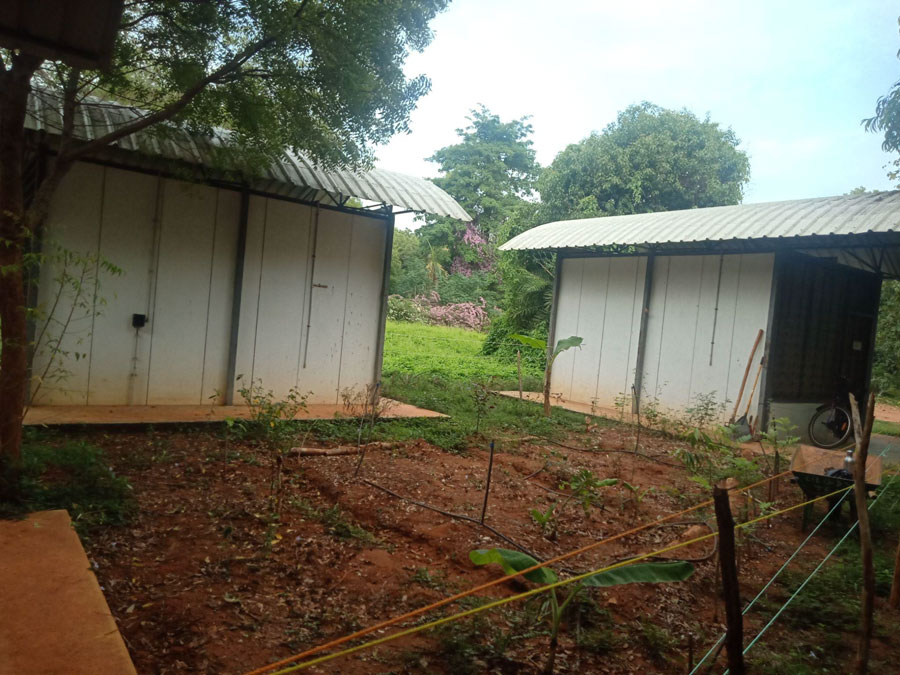
The project was realized in La Maison Des Jeunes, Auroville in South India.
MDJ is a volunteer community in Auroville, with twelve capsules for twelve individuals, a common kitchen and 4 showers and toilets and one garden.
The garden space was left abandoned for some time before we got the charge of renovating the garden. The garden space was 9 m by 4 m and was in a terrible
state. The few plants surviving were Ramphal, Moringa and a banana. Rest all was dead and the soil was directly exposed to the sun.
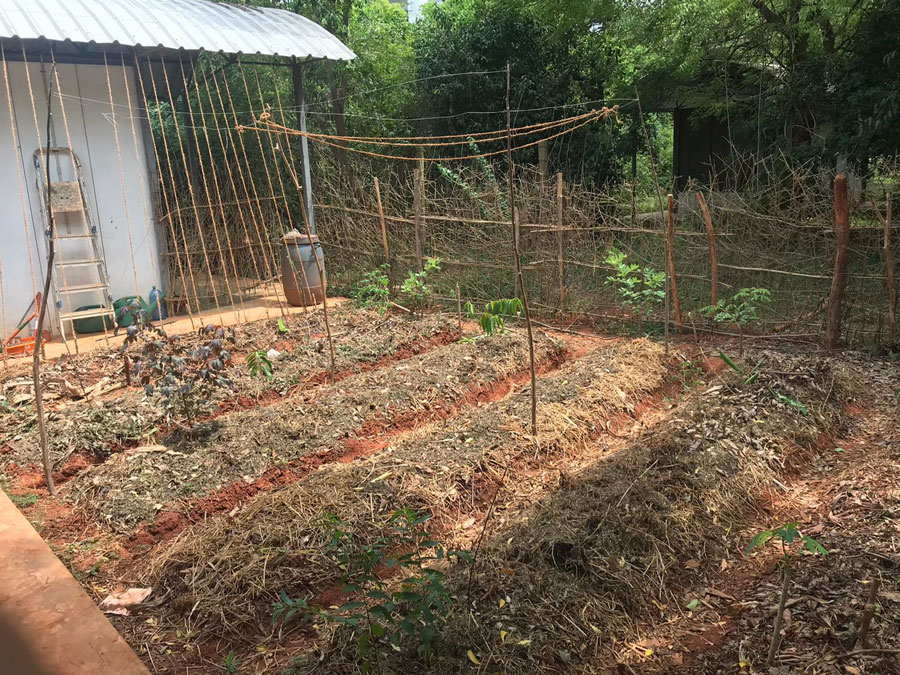
The project used minimal financial expenses to come from ideation to reality. Once we were given to restructure and redesign the project, the first thing we did was to fence the garden, as street cows were one of the biggest threats to the garden in that area.
However, we believe all creatures have their own values and spaces, and we should be respectful of them. We sourced bamboo fence panels from the local bamboo fence weavers and fixed them using the posts. We also created six raised garden beds, and dugout the pathways into 30 cm deep trenches. There was an abundance of green and dry organic matter around us and we flooded the garden space with them. We included features like live fencing, vertical wall for more shade and privacy, compost zone, access gate, access pathways, water harvesting trenches, hugel beds.
Since Auroville has only 600 mm of rainfall annually, and is often dry, it was important for us to increase the fungi activity within the garden.
The garden grows mung beans, long beans, cow peas, winged beans, rosella, moringa, cassavas, sweet potatoes, chaia spinach, malabar spinach, bitter gourd, bottle gourd, sunflowers, cosmos, tomatoes, egg plants, corns, pumpkins, butternut squash, chili, rockets, papaya, rose moss, okra, papaya, jicoma, onions, ramphal, lemon grass, passion fruit and more.
Since the garden is a bio-mimicry of a food forest, there is rarely any problem with the pests.