
My journey with Project Tres had started in January 2021, when a colleague and a friend from my fashion days connected me with Carla. Project Tres is an NGO from Germany, with its operating centres in Goa and Nairobi. It was founded by Carla in 2016 with an intention of empowering women and helping them grow and be more financially and emotionally independent, one woman at a time.

Menstrual hygiene workshop in Project Tres Community Centre, January 2021
For the first time I was there for a week, facilitating a few menstrual hygiene sessions with the women of the NGO. That went super smooth and I genuinely felt a connection with the ladies there. After going back I proposed to Carla and Amanda that I would like to do a 1 month training program with the women to grow their own food. They were onboard with the idea and liked that we could create a community garden outside of the community centre / Project Tres’s office space.
I arrived in Goa, excited to do something together with the ladies. The women were excited to grow their own food. By the way before we move any further, I have to say that I found myself overjoyed and quite amazed with the excitement with which they wanted to continue learning, as curious as children and so full of joy and life. One of our participants, Neeta or Aai as everyone called her lovingly (I don’t know her age) was certainly above 70, walking with a stick and coming for a cloth pad making workshop and sitting through it all and doing it; it has been very rewarding and humbling experience for me.
So, we had decided, that we will set up a small community garden outside the centre which will be taken care of by the women associated with Project Tres. And in return they would get to eat their own home grown organic vegetables. I would train the women in doing so and then they could carry it forward either by growing food in their homes or training many other women going forward, if it could become some sort of extra revenue generation scheme. The ideas and possibilities seemed abundant.
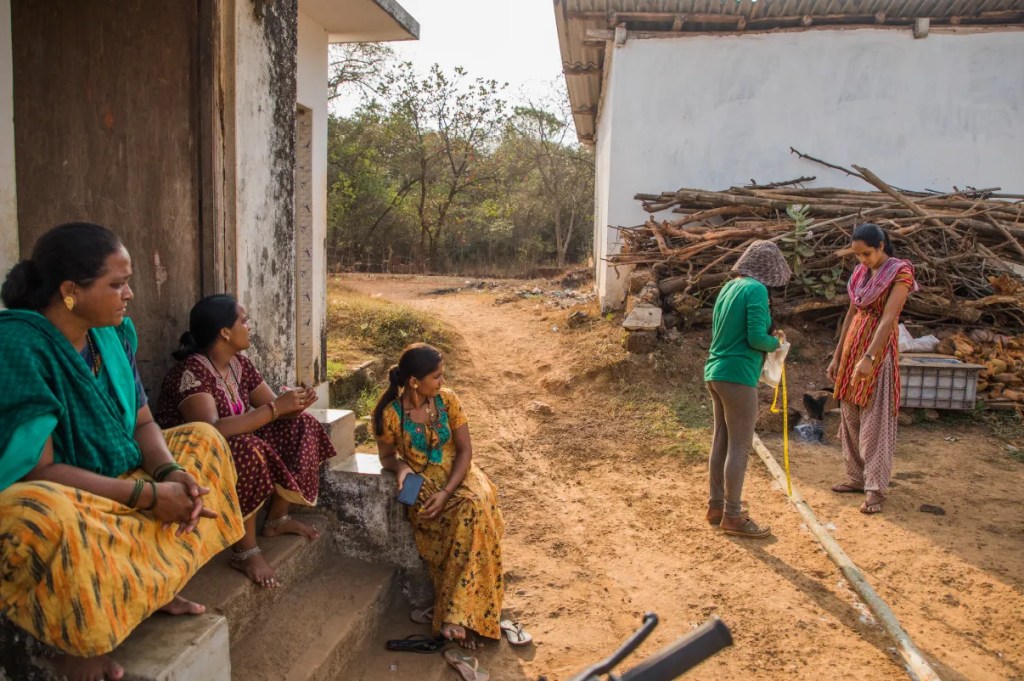
Surveying and measuring the land outside Project Tres Centre
However, what fun would it be if a project doesn’t hit a few roadblocks on the way. The land outside the centre belonged to the owner from whom Project Tres was renting the place and he had no objection. However, one of our neighbours, who had a small bar next doors got very insecure about the fact that we were going to do something on a land which didn’t belong to them any which way and decided to pick their battle with us. It resulted in confrontation, them threatening me and the ladies and creating a very negative energy around the whole vision. Even if we would have gotten ahead with it, it wouldn’t have guaranteed that the garden would not be vandalised / the women wouldn’t be harassed. I was there to just train and go. They were the ones who had to live there and deal with any consequences my actions would have brought.
That night brought restlessness to me, it felt like both Project Tres’s and mine efforts to come for a month and actually do something meaningful had shattered. I had to come up with what to do and how to do, else all of it was a waste and I would have to live with that guilt somehow.
The President of Project Tres, Farida had proposed I can make the garden in her house, which was a relief to hear; that also gave us an idea of making multiple gardens using multiple techniques and resources in multiple women’s houses. We spoke with Carla and Amanda about it and they were okay with it. Then we spoke to the ladies about it, and they were happy to make gardens in their homes. It is to be noted that all the women didn’t have space in their backyards; and since we were also on a 1 month timeline, I didn’t have enough time to implement 15 gardens. So we narrowed it down to 6 houses, out of which 4 were in close proximity and two were at quite a distance.
The women who wanted gardens in their houses were Manoj Devi, Lakshmi, Sharmila, Rupa, Rajeshree and Farida.
Personally, what stood out to me and felt beautiful was that everyone had such different shapes and sizes of the lands, which could then enable us to be creative and different with every plot. It gave us more opportunities and exposure in terms of space management and soil health and also the sheer joy of the community coming together and helping out in the ways they can.
I was now even more excited about the project, because the capacity building would get diversified through the unique nature of each place.
The long term goal in my head was for each women to maintain and keep their gardens and eventually make a community garden at some point. However, having experience working with a few communities over the time, I have realised these long term goals of self-sustainability are a possibility where you are hand-holding for multiple number of years, when sustainability becomes like second nature. The long term impact of the project was probably the confidence which women got, their realisations of what worked and not in the process and what defined the success or failures of their gardens for them. That learning was probably the long term goal; the one which Project Tres was trying to create and what mattered the most. I am happy that I got to play a tiny part in it; and in exchange I and the ladies learnt from each other. They learnt my skills and I their resilience and dedication to learn and always evolve.
Other than these six women, quite a few joined the trainings / workshops. They became my family in the process and we had a lot of fun. I would love to talk about all of them, but today I want to focus on what we did in those 6 houses and a little bit about the six women.
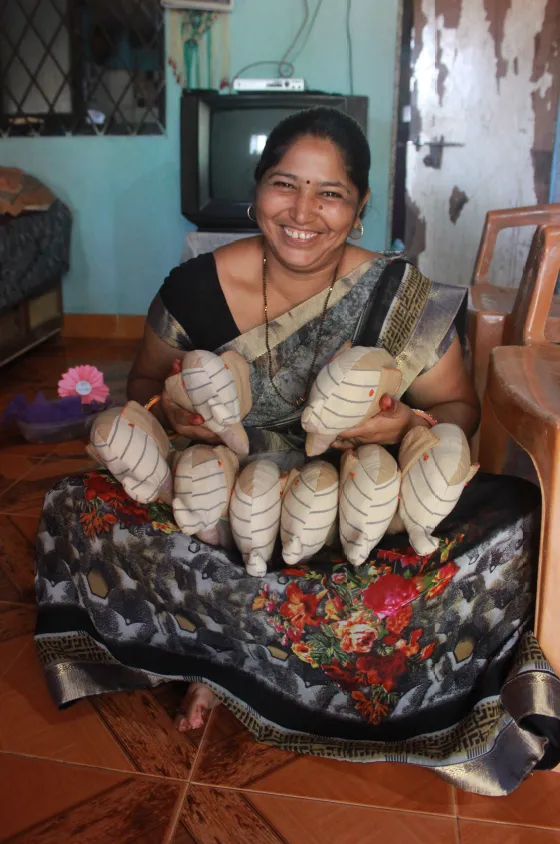
Manoj Devi hails from Rajasthan, she moved to Goa over 20 years back with her husband.
She has been working with Project Tres since 2017. She is the mother of 4 kids, and her first working opportunity in life was inside Project Três.
She has a monthly salary since last year, and due to that, she was the one responsible to look after her household expenses during Covid times.
She proudly says “Now I know, women can do anything.” She and her elder son are fond of gardening, and hers was the first house where we made the garden.
We made a raised garden bed (80 cm * 2 m) in her house. Since she had very little soil in her house, we used a lot of dead organic matter and trained all the women in regenerating soil.

Garden Design for Manoj Devi’s house
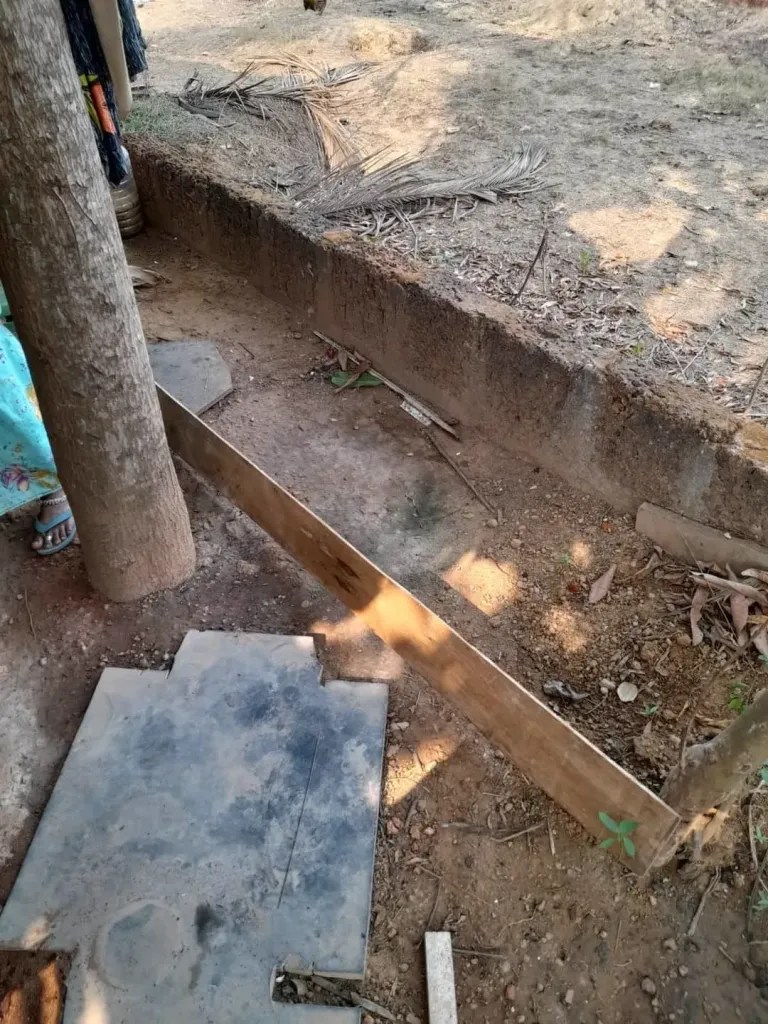
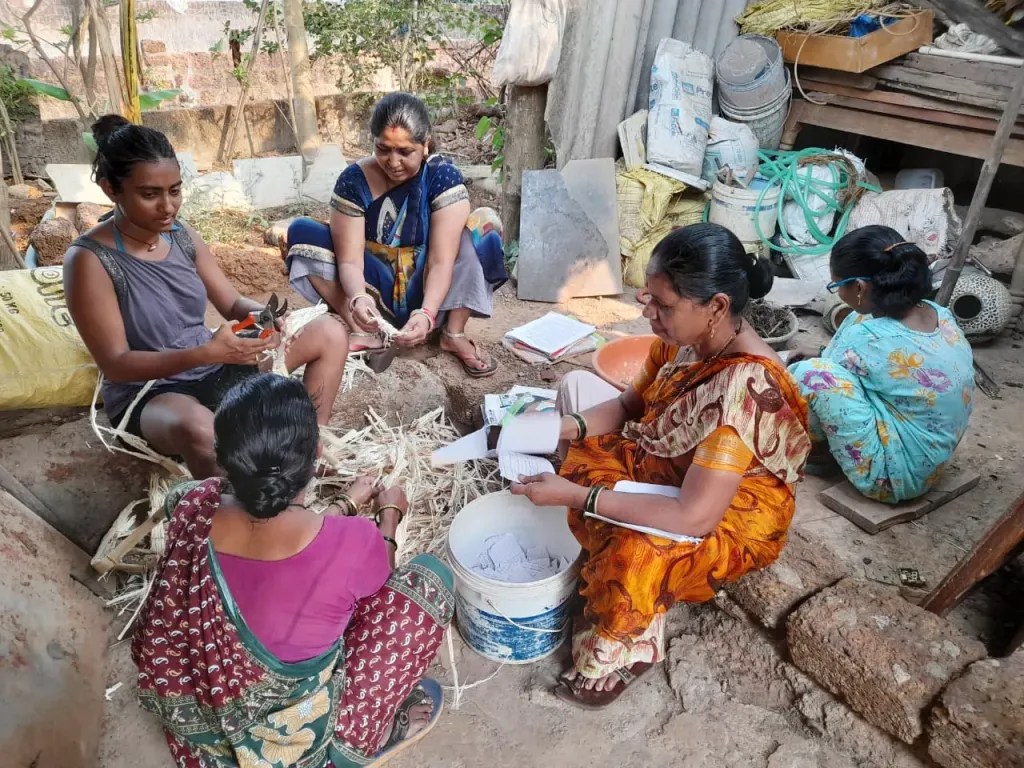
Marking the garden area; dealing with organic waste resource for soil building
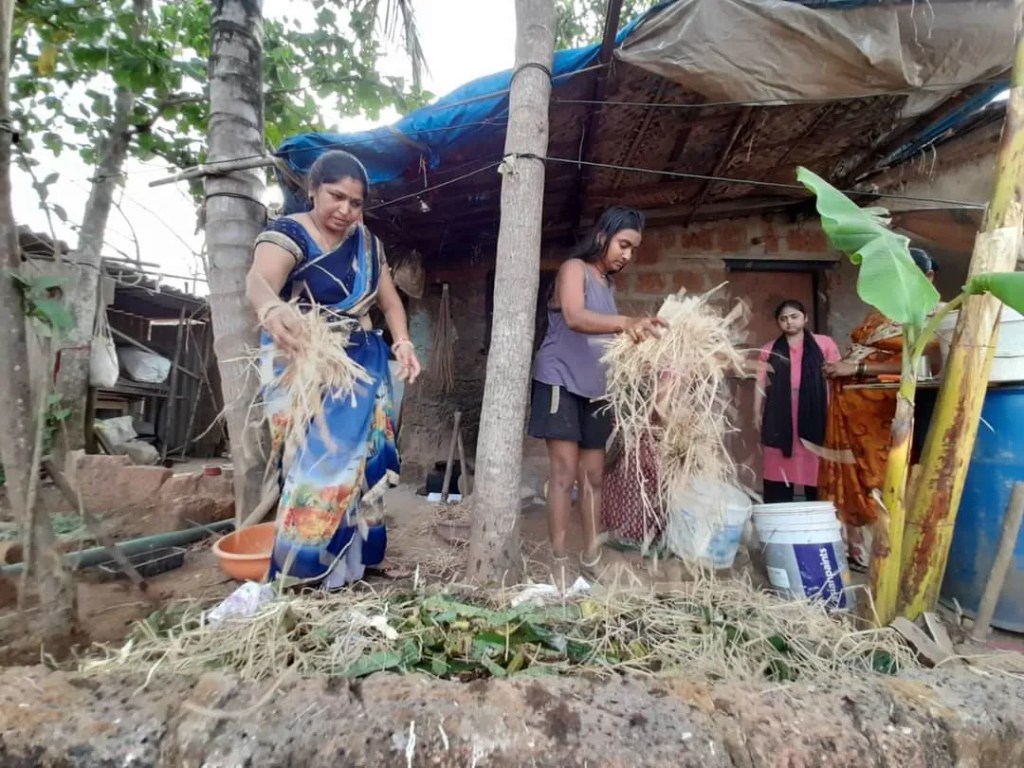
Adding the nitrogen and carbon to the garden bed
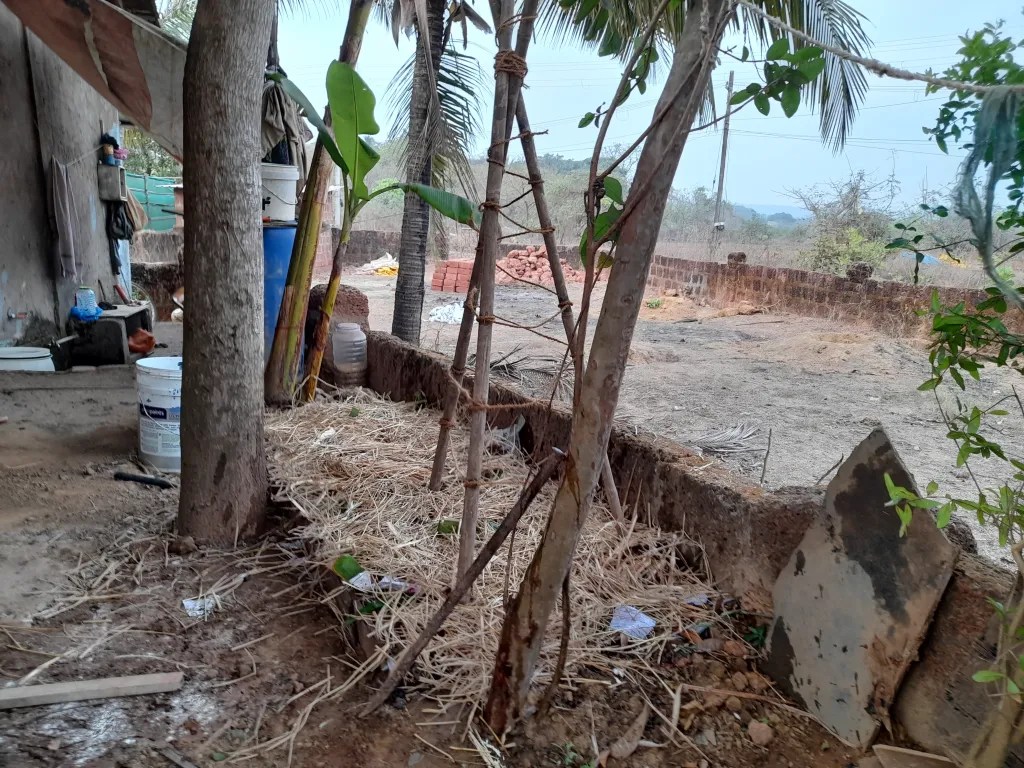
Finished garden bed with a trellis
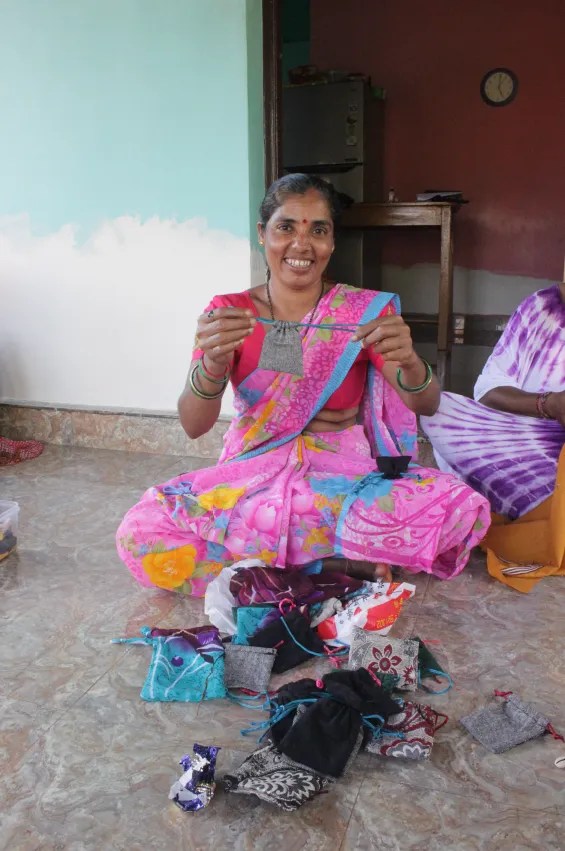
Lakshmi hails from Belgaum, in Karnataka but has been living in Goa since last many years.
She works as house help in Anjuna. She used to know very little stitching but learnt a lot more after joining Project Tres.
She is a mother of 2 and very sweet woman. She loves to garden and had a small garden already. She was so curious to learn how to improve her gardening skills.
It was such fun to create an extension of her tiny patch using the permaculture tools, her garden was made asymmetrical by maximizing land use and adding a small soak trench at the edge of the garden.
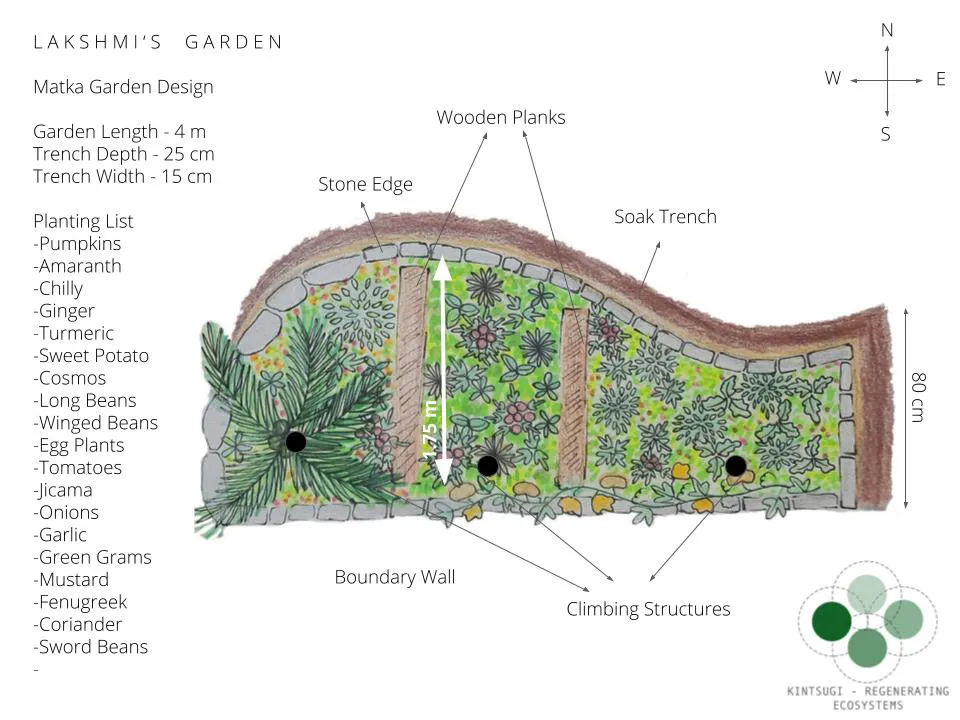
Lakshmi’s garden design
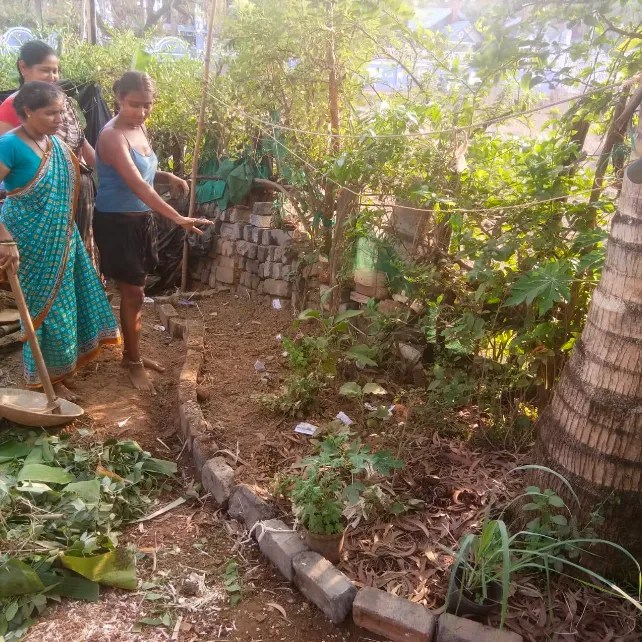
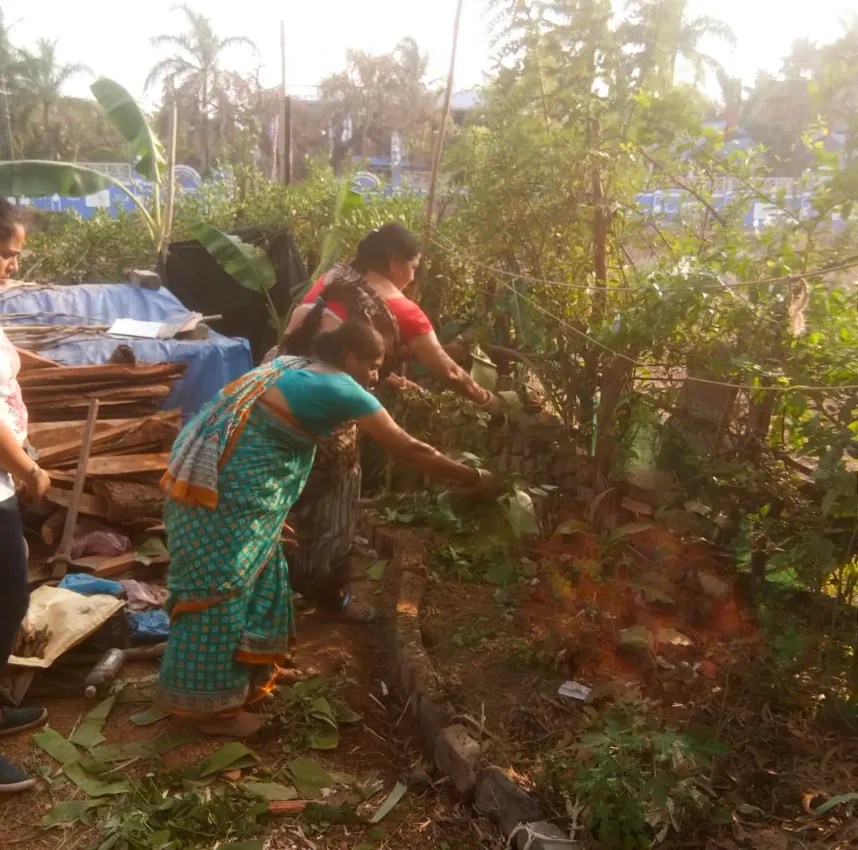
Marking, preparing and making the garden ready

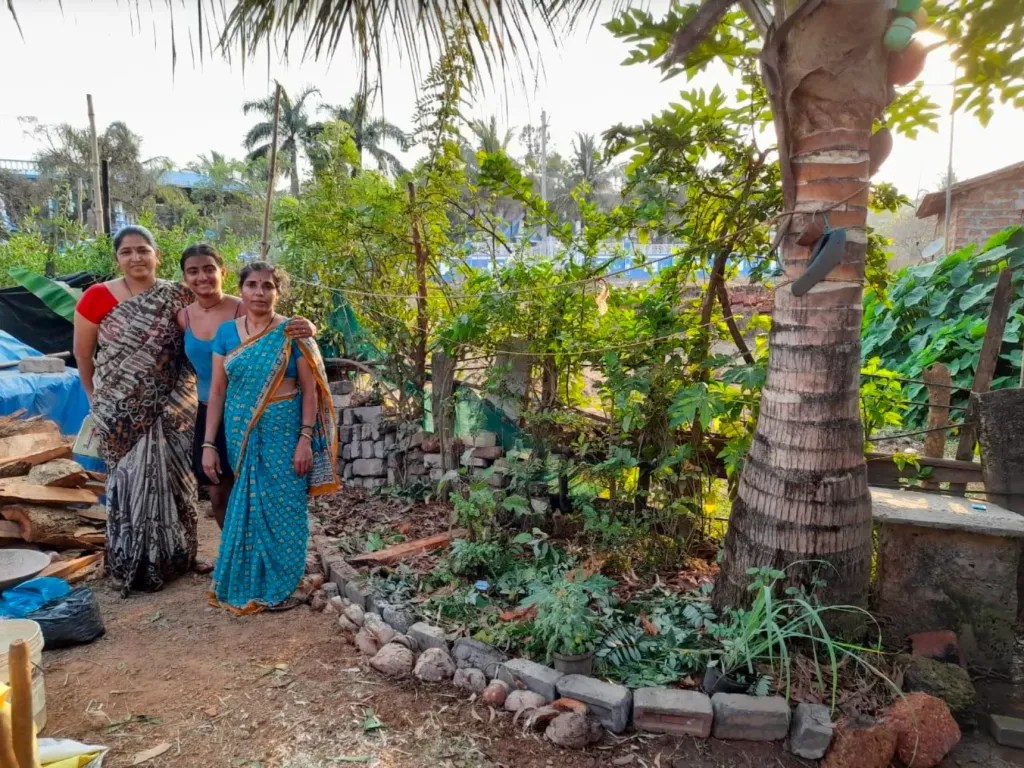
Ready garden bed
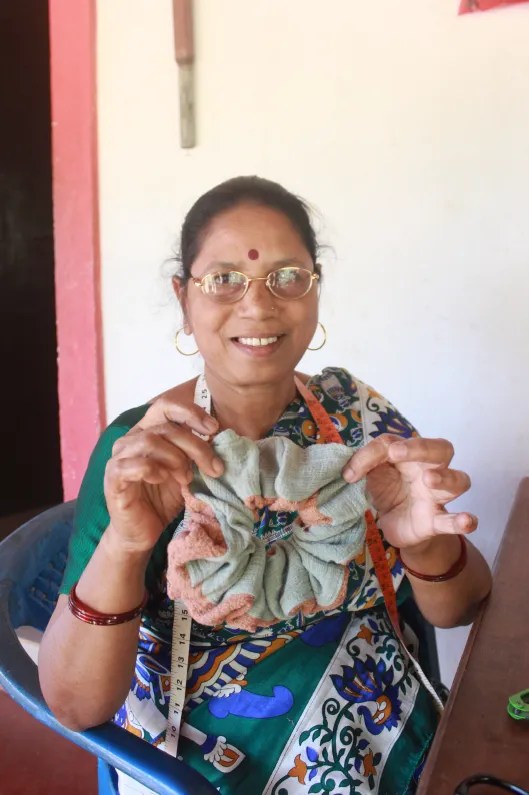
Rajshree hails from Goa. Project Tres was her first job in her life. She had a sewing machine but only had stitched things for her family and children. Her husband is a carpenter. She is always smiling and she loves the work she does, she enjoys stitching and feels very proud of seeing her products ready. She was skeptical of us starting a project in her house, as in the beginning she did not understand what we would do to her land, but got super excited when she saw the work
we did in Manoj Devi’s house. We created a keyhole inspired garden (diameter of the bed 2m) for Rajshree, which had a 30 cm deep soak trench.

Rajshree’s garden design
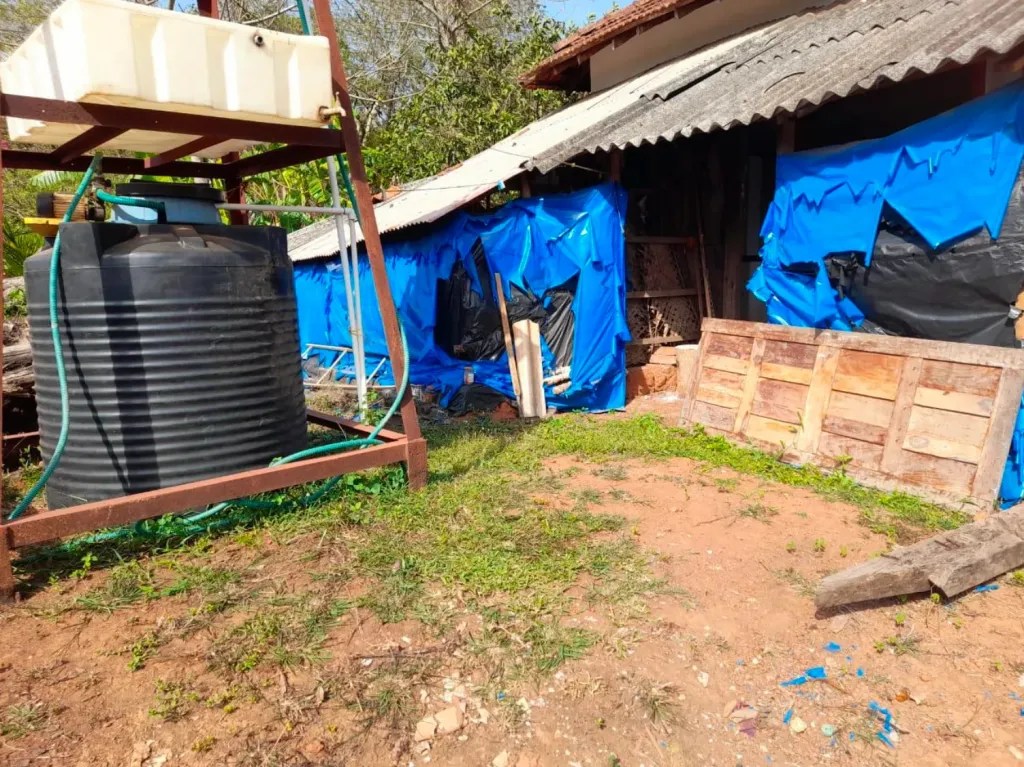
Before
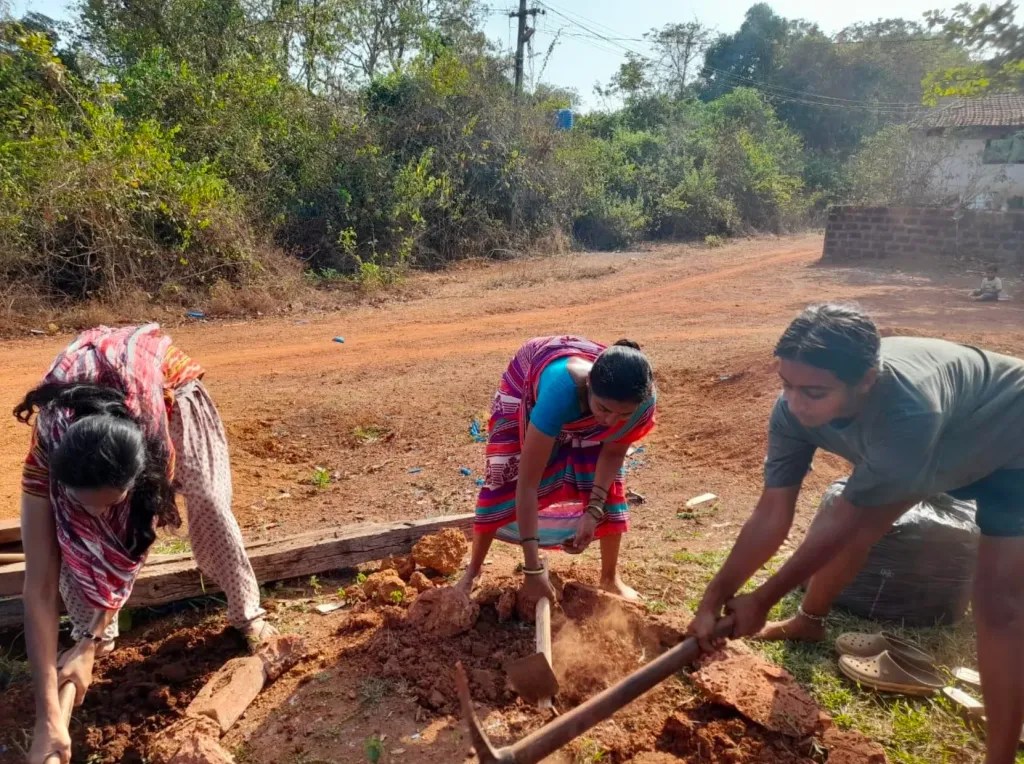
Loosening the existing soil
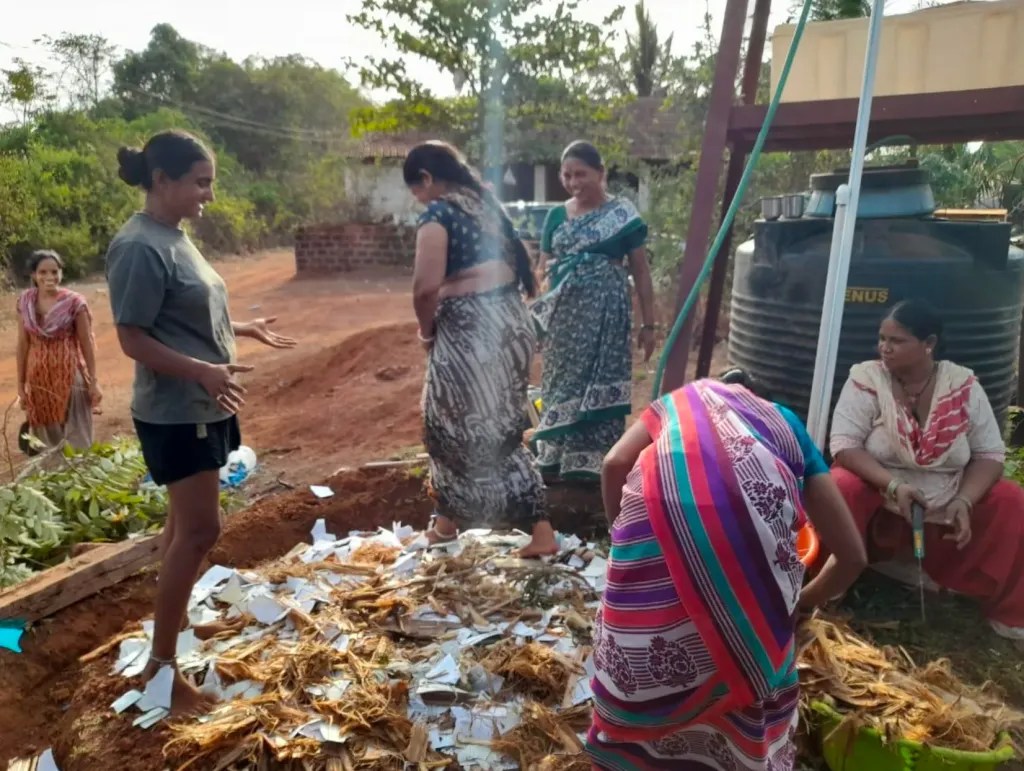
Adding banana waste and other nitrogen and carbon material
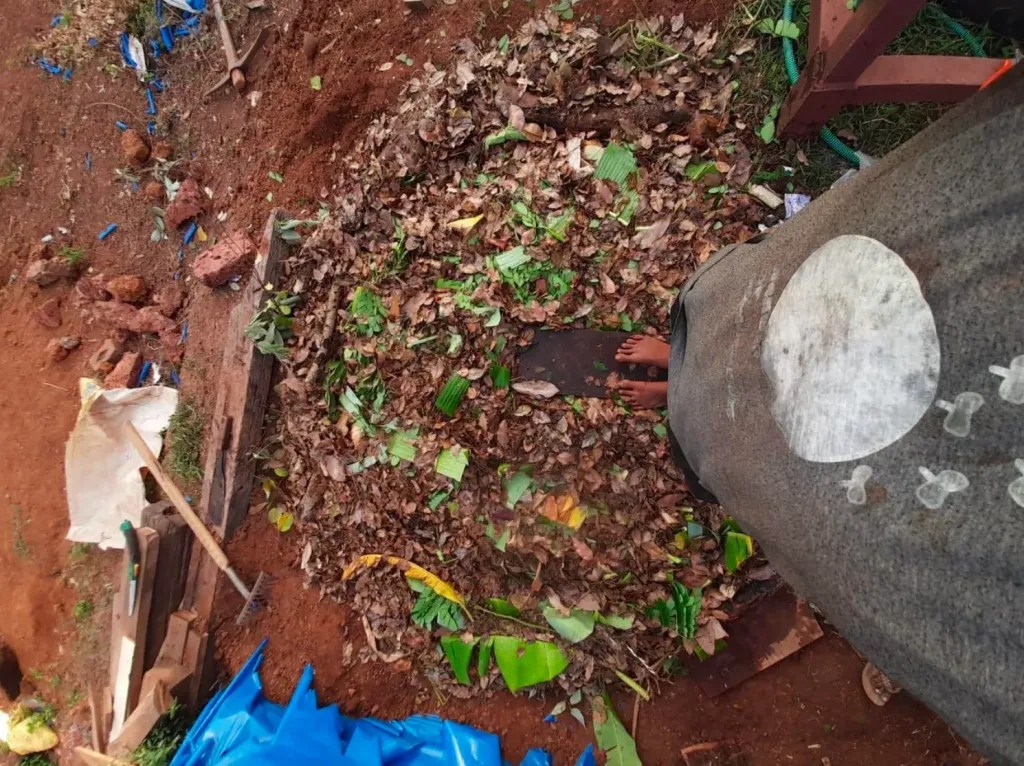
Finished garden bed
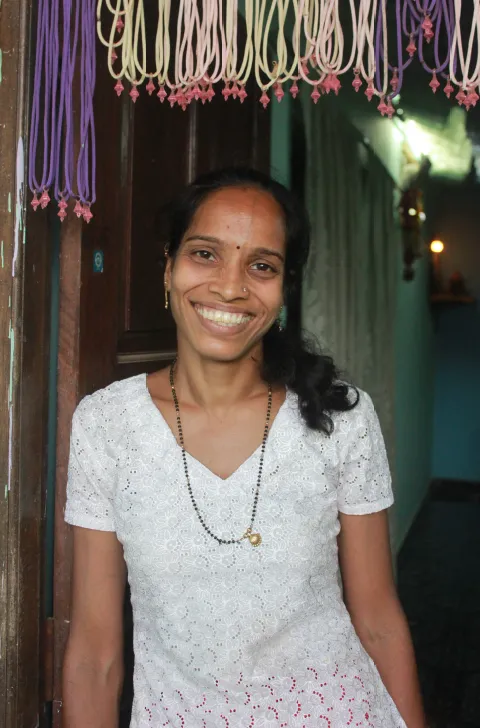
Sharmila is one of those very strong wonder women, she is a very dedicated and hardworking person, always curious to learn something new. She comes from South Goa and moved to Anjuna post her marriage. She used to have a comfortable life as she and her husband both were working. She has a nineteen year old daughter. She lost her husband in 2019, and after his death she became the only breadwinner for her family. She is a very talented tailor, artisan and a chef.
We had so much fun working with Sharmila, she was like a machine, always working hard on the ground and never getting tired. She was so excited during this whole gardening process. In her house we were able to do raised garden beds but also implement a grey water harvesting banana trench.

Sharmila’s garden design

Measuring and marking Sharmila’s garden beds
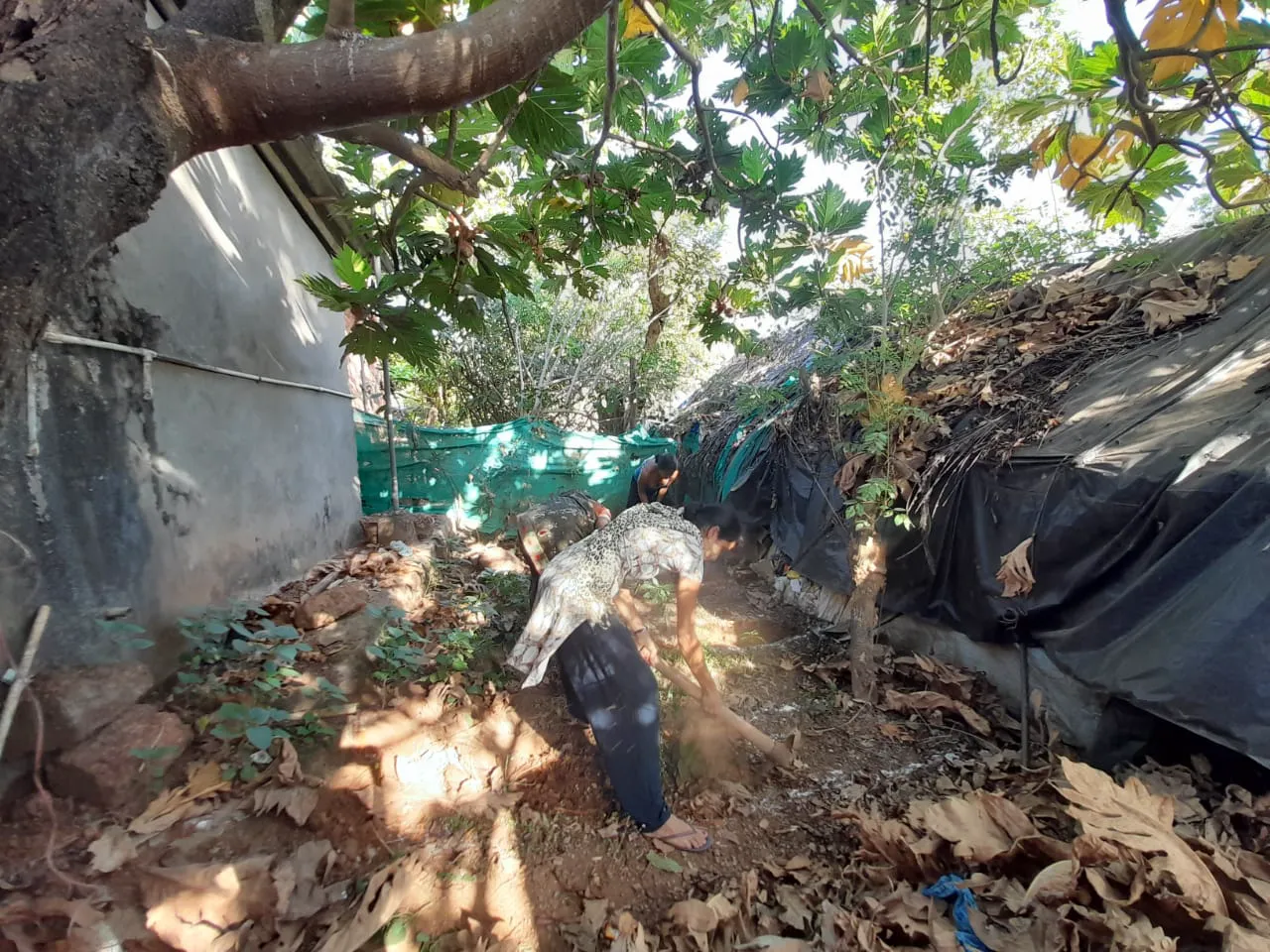
Digging the beds
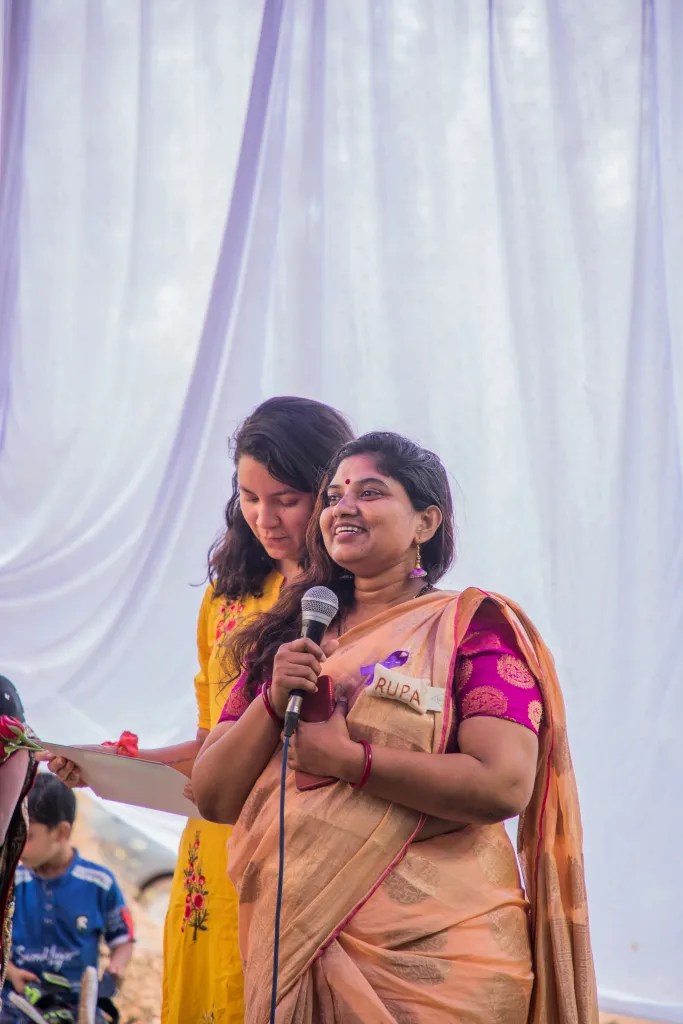
Rupa is from Goa and worked as the quality control manager for Project Tres at the time. She is a mother of two beautiful girls. Rupa wanted to be an engineer but being a woman in the society, the closest she reached to working with machines was the sewing machine. She is very educated and could run a business of her own but has been taken advantage of in the past by wrong clients. She has been working with the project with a monthly salary since 2019. Rupa’s garden space was the biggest so we could actually use that as the demonstration base for educating and training all the women. We could also find the maximum resources available in her house and surroundings. We created 4 raised beds with soak pit cum trenches in her house.
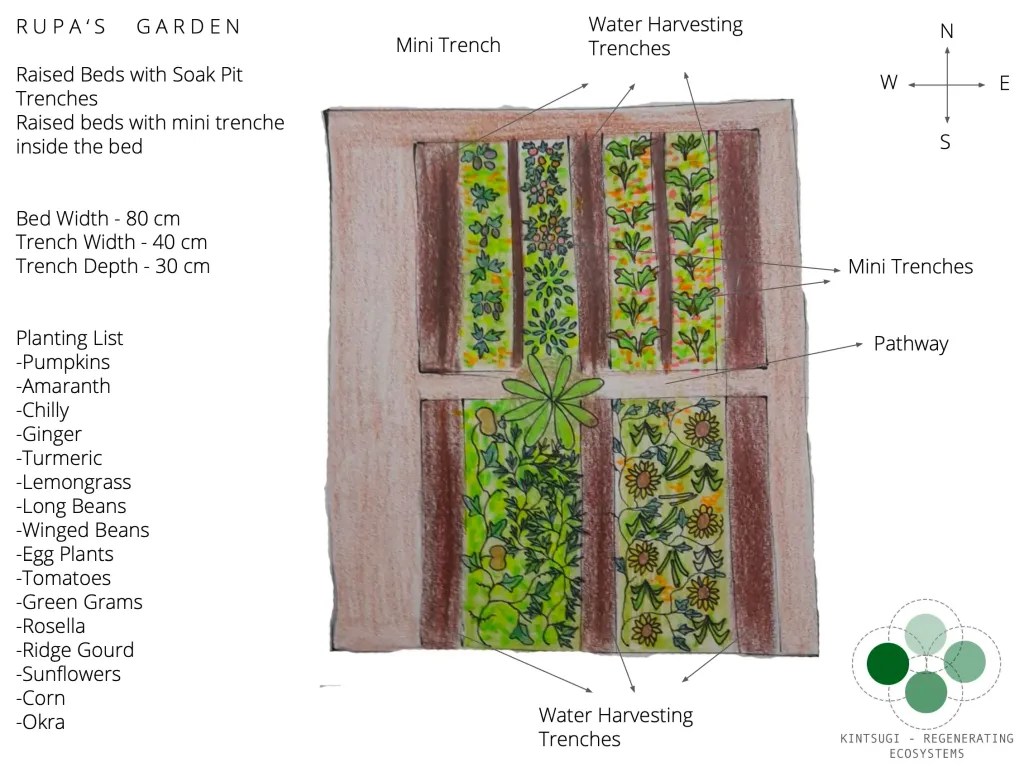
Rupa’s garden design
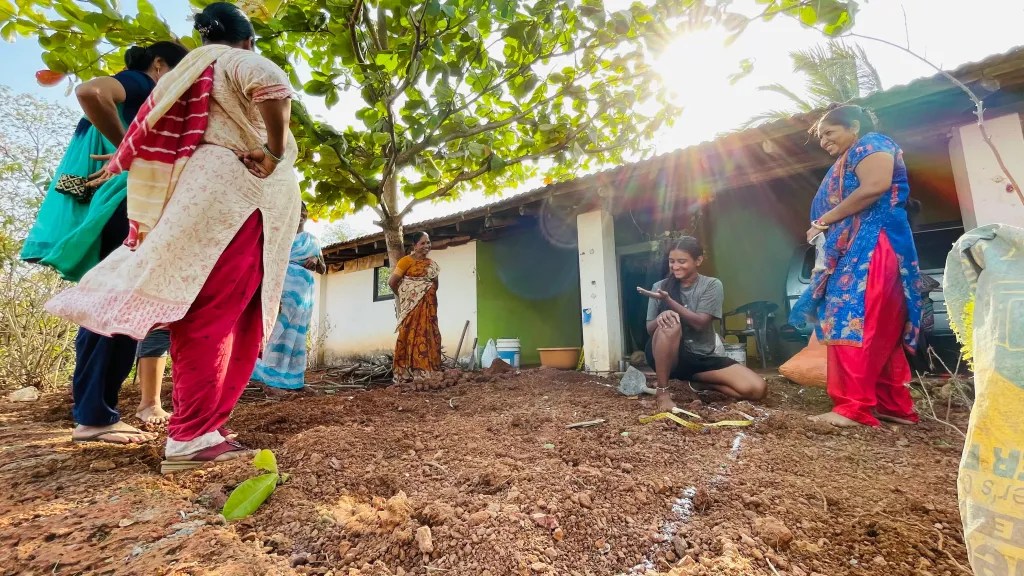
Surveying and marking the land
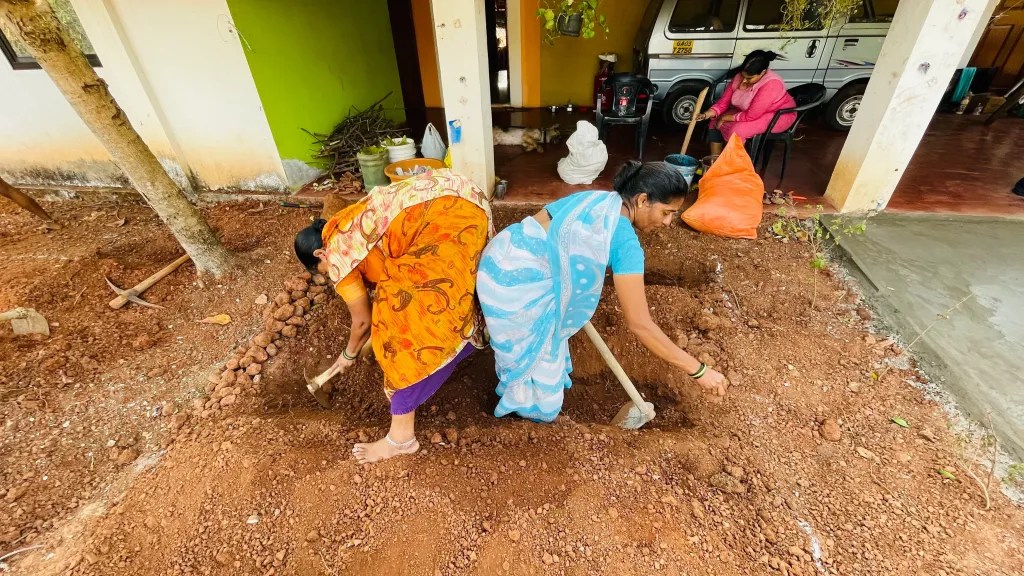
Digging the trenches and garden beds
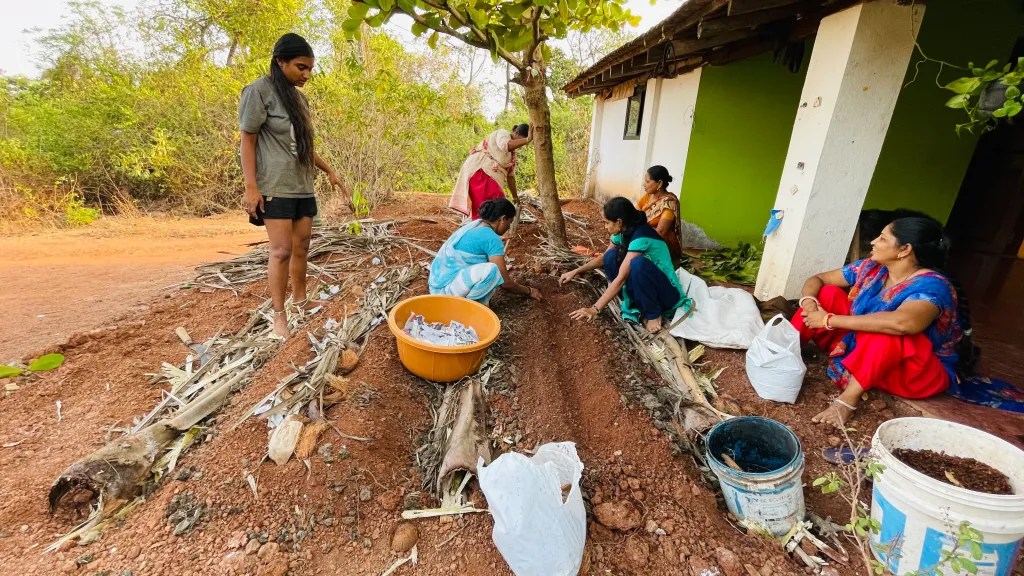
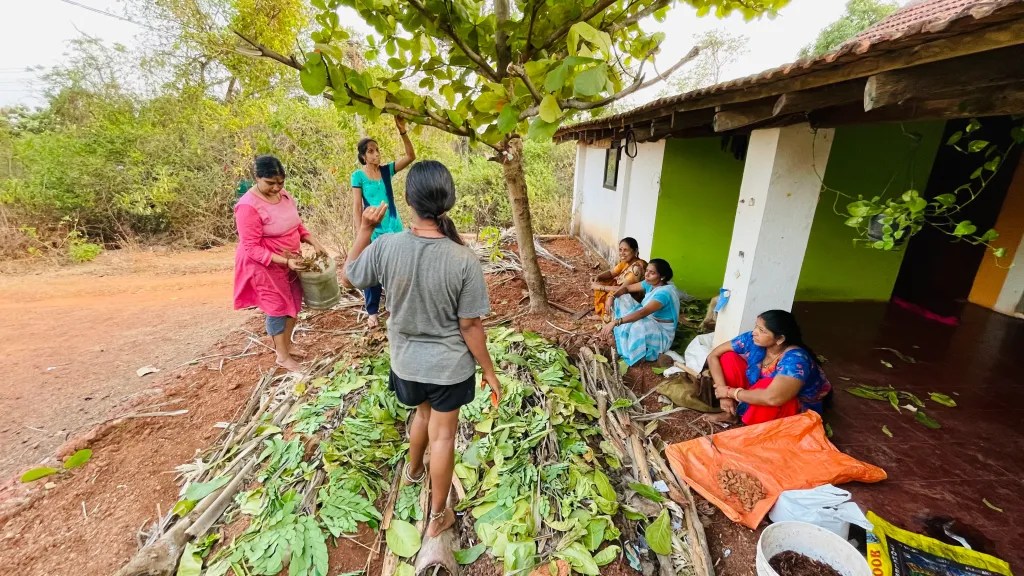
Preparing the garden beds using banana plant waste, charcoal, woods, waste paper and green leaves
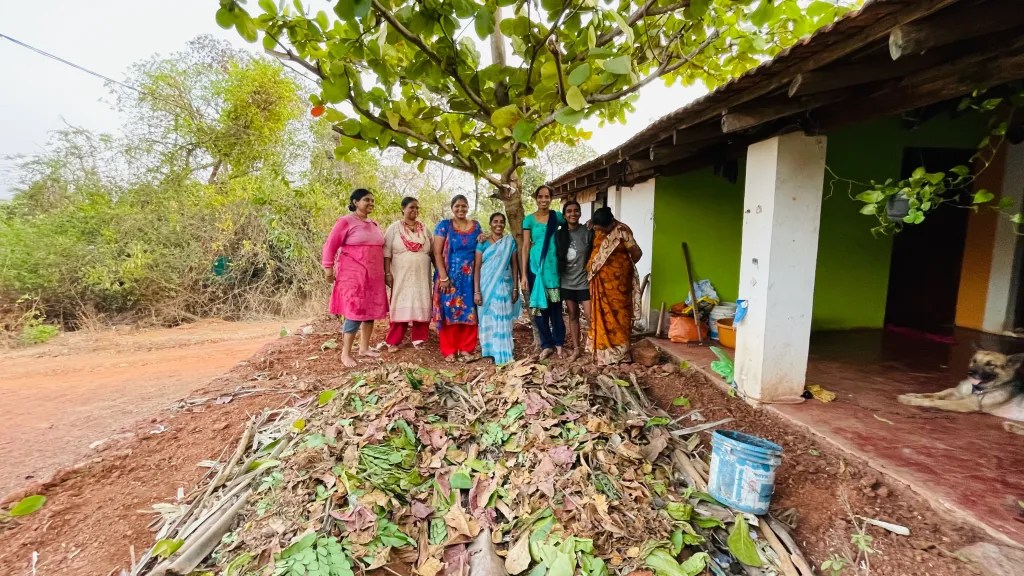
Finished Garden

Farida, one inspiring woman you meet and are thrilled by her persona. Anyone who meets Farida cannot say they don’t love her. A mother of 5, she is a passionate babysitter and runs her own babysitting business. Farida started working with Carla in 2016 to actually establish Project Tres and has been on a monthly salary since 2018. She is the President of Project Tres in India.
Farida is one of the busiest people we have seen, she is working all the time. Because of her work hours, to create a garden in her house was the most challenging, but her passion was such that somehow things worked out quite well in the end. Because of her work hours she could not attend any other workshops but only the one we did at her house. We created a garden there, but it was not as diverse as other gardens. The reason for that was I was getting ready for my departure at the time we made the garden and also she lived so far away that no one could join her garden making other than Sharmila.
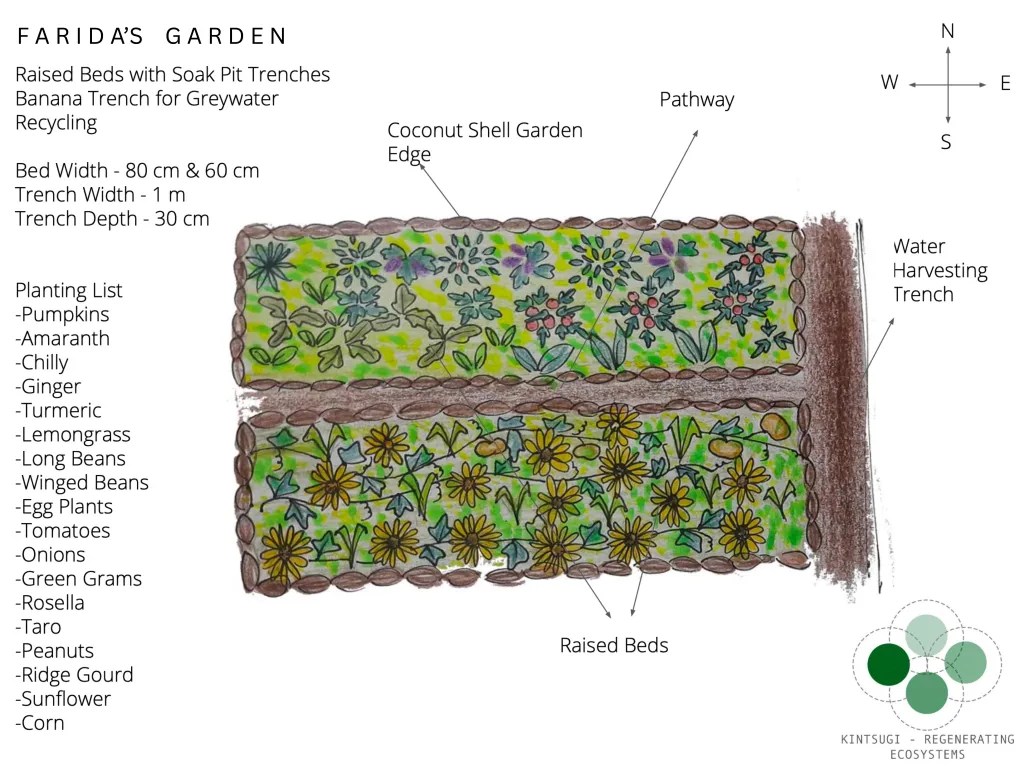
Farida’s garden design
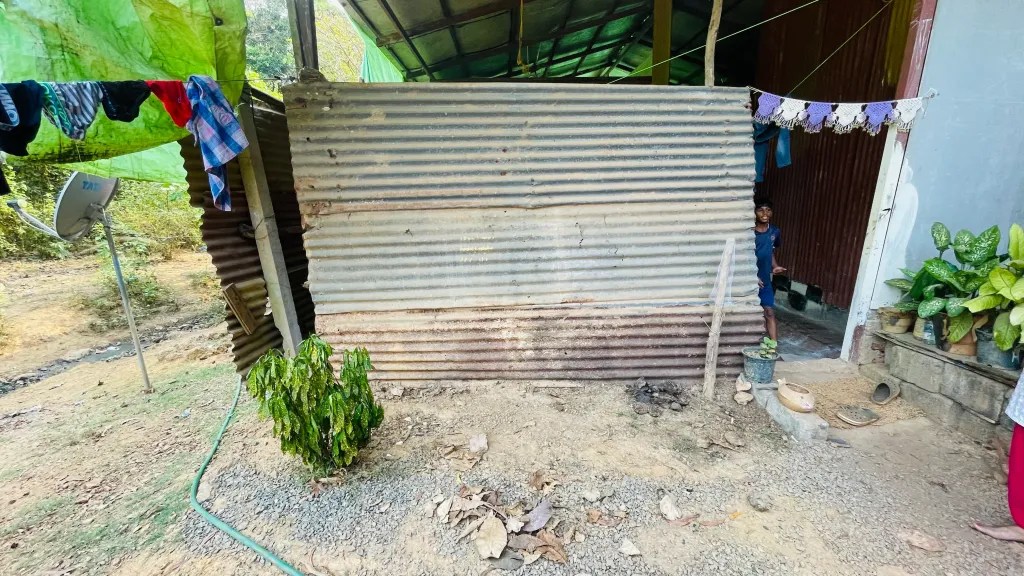
Farida’s garden area
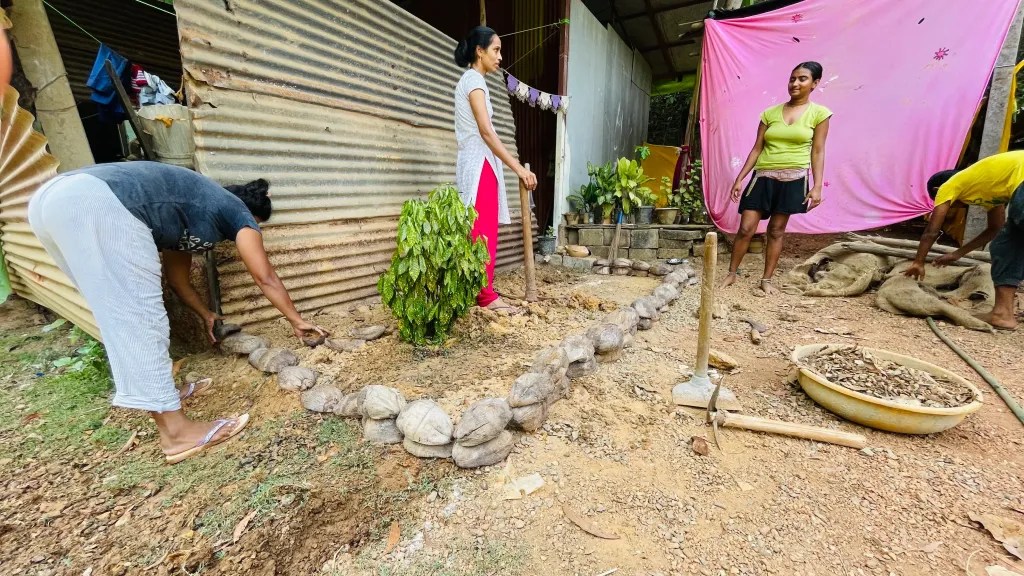
Preparing the beds
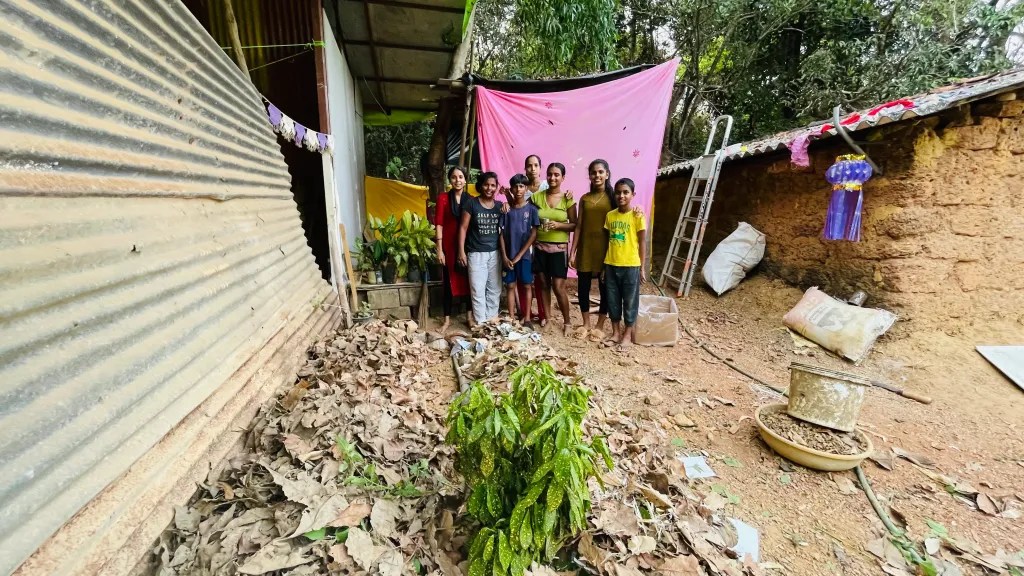
Ready and mulched beds
Now that the beds were ready and we had practiced enough with each garden, it was time for the ladies to continue growing the food; to see if the seeds we sowed together came or not; to plant new seeds and saplings, now their garden belonged to them. In some ways, the project became very different from what I had initially imagined. I had gone there thinking that we would create one community garden where everyone would come together, learn, grow food and eventually take it forward. Instead, we ended up with six little gardens in six different homes. At first it felt like we were compromising because the original plan could not happen, but looking back I think the change actually gave us something much more interesting. We got to see how the same ideas could work differently depending on the person, the space, the resources available and even the amount of time someone had. It also made me realise that sometimes the project you start with is not necessarily the project you end up doing, and that is not always a bad thing.
For me personally, this was an amazing milestone which prepared me for the world of working with communities and women. It was my first project of working with a community in India; before this I had only done individual design projects in India and the only community related projects I had done were in Kenya and a very short one in Uganda. I couldn’t have asked for a better community in India to start my journey with. I will always be grateful to Carla for trusting me with what I had to offer and calling me back a few times; her kindness gave me so much of confidence and the comfort of feeling that I am on a right path after having left fashion and carving my way out in the world (In India) when everyone questioned please explain what permaculture means.
End of the day the choice lies with you, whether the journey you embarked upon feels yours yet or is inspiring but not enough to take or sustain the action. And that is the beauty of life, there is no solution or intervention which fits all. And some times, things simply take a lot more time and a lot of persistence. Some of the ladies managed to continue growing food, others could not; and sometimes that’s the simple truth. Not everything you see the benefit in resonates with the other. And I don’t say it with a bit of sadness or disappointment; working with grassroots has really taught me how priorities shift and how to hold a non-judgemental space for your own self and the people you are working with. They learnt a new skill and that’s very fascinating. And these were the warmest set of women I have worked with, what fun and joy it was, even today after 5 years when I look back, I have the widest smile on my face remembering our time together.
If I had to go back and do things again, I would do many things differently, I would hand hold differently and actually be involved with any project for a lot longer than I did in any of my earlier projects. Now over the years, my interaction formats have changed and so have my capacity building workshop techniques. Now I take up any projects for a lot longer and make sure I handhold and work with each success and failures.
At some point, any project has to be completely handed over, and that is still a very difficult part for me, to let it go with the thought of what if it doesn’t thrive as much as I would want it to. But all my work teaches me more acceptance and letting go at some point.